
TUM project estimates electric truck batteries could cut freight energy costs by around 10 percent
A consortium led by the Technical University of Munich says electric trucks can serve as flexible storage for depots and the public grid, with energy savings estimated at around 10 percent.
 AI illustration
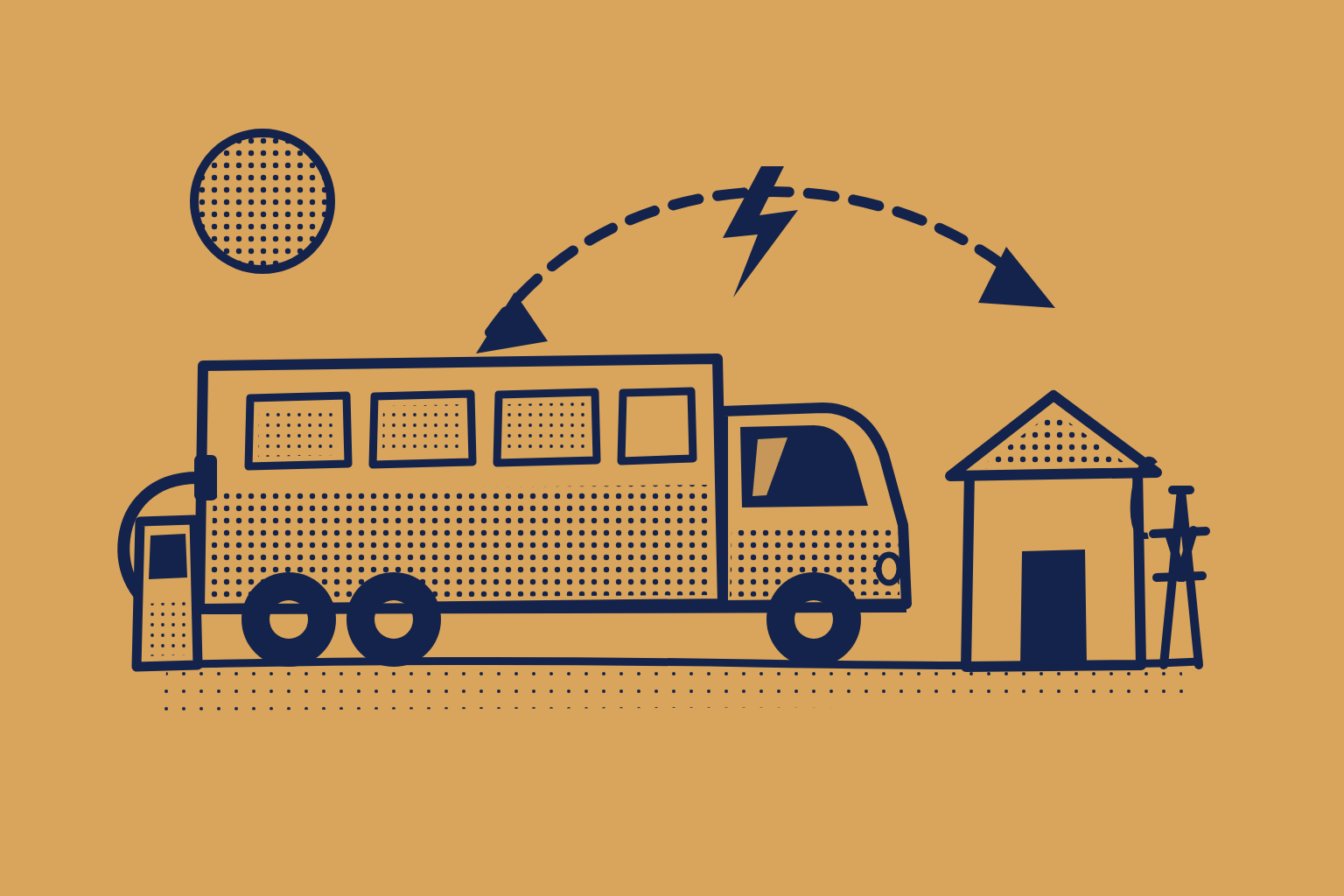
Electric truck batteries could work as energy storage for a depot or the public grid and could help freight carriers lower their energy costs, a research consortium led by the Technical University of Munich (TUM) said as its SPIRIT-E project came to a close. The project team estimates that using the stored electricity at the depot could reduce energy costs by around 10 percent. For a truck covering 100,000 kilometers a year, TUM said, that equals the energy cost of 10,000 kilometers of driving.
The partners tested the technology at a freight forwarding company in Regensburg with an electric truck that had a usable battery capacity of 480 kilowatt-hours. Through a bidirectional DC charging station, the truck fed electricity back at up to 350 kilowatts. Three uses were tried: supplying other vehicles, supporting the power supply of the company's premises, and feeding electricity into the public grid. The vehicle and the charging infrastructure communicated on the basis of the international standard ISO 15118-20.
In a test environment, the partners also simulated charging when electricity prices are low and selling electricity back when prices are higher, which the consortium said could give freight carriers an additional source of revenue in the future. The consortium developed and tested interfaces between trucks, charging stations, energy management systems, electricity marketers and grid operators, including a reservation system for charging stations.
Accompanying research by the TUM Chair of Automotive Technology drew, among other sources, on real-world driving data from six German heavy-duty vehicle fleets covering 2.15 million recorded kilometers. According to the researchers, if electric trucks can reserve public charging points in advance on long-haul routes, the median additional time needed compared with diesel trucks falls to around 1 to 4 percent, depending on the scenario. Companies that plan solar power and battery storage together with their fleet and depot can save 25 to 44 percent more than by converting the trucks alone. Smart integration with the power grid and electricity market lowered the total costs of the fleets studied by an average of 1.7 cents per kilometer, and with bidirectional charging the reduction reached 6.1 cents per kilometer.
How much a carrier can save depends primarily on annual mileage, vehicle downtime and electricity prices, the researchers said, and vehicles in regional transport that return regularly to the depot are particularly well suited. TUM said the biggest hurdles now lie less in technical implementation than in grid integration and the economic framework: at many depots the existing grid connection capacity is insufficient to charge larger fleets, there are currently no uniform standards for marketing electricity stored in truck batteries, and it remains to be determined how responsibilities and revenues should be divided among freight carriers, vehicle manufacturers and electricity marketers.
SPIRIT-E ran from August 2023 to October 2026. Besides TUM as consortium leader, the partners included Fraunhofer IEE, the Research Center for Energy Economics, SBRS (Shell), TenneT, Hubject, Consolinno Energy and MAN Truck & Bus. The Federal Ministry for Economic Affairs and Energy funded the project.