
TUM soft exosuit assists standing and walking with artificial tendons
Movement sensors and machine learning help a wearable motor system time its support to the user’s movements.
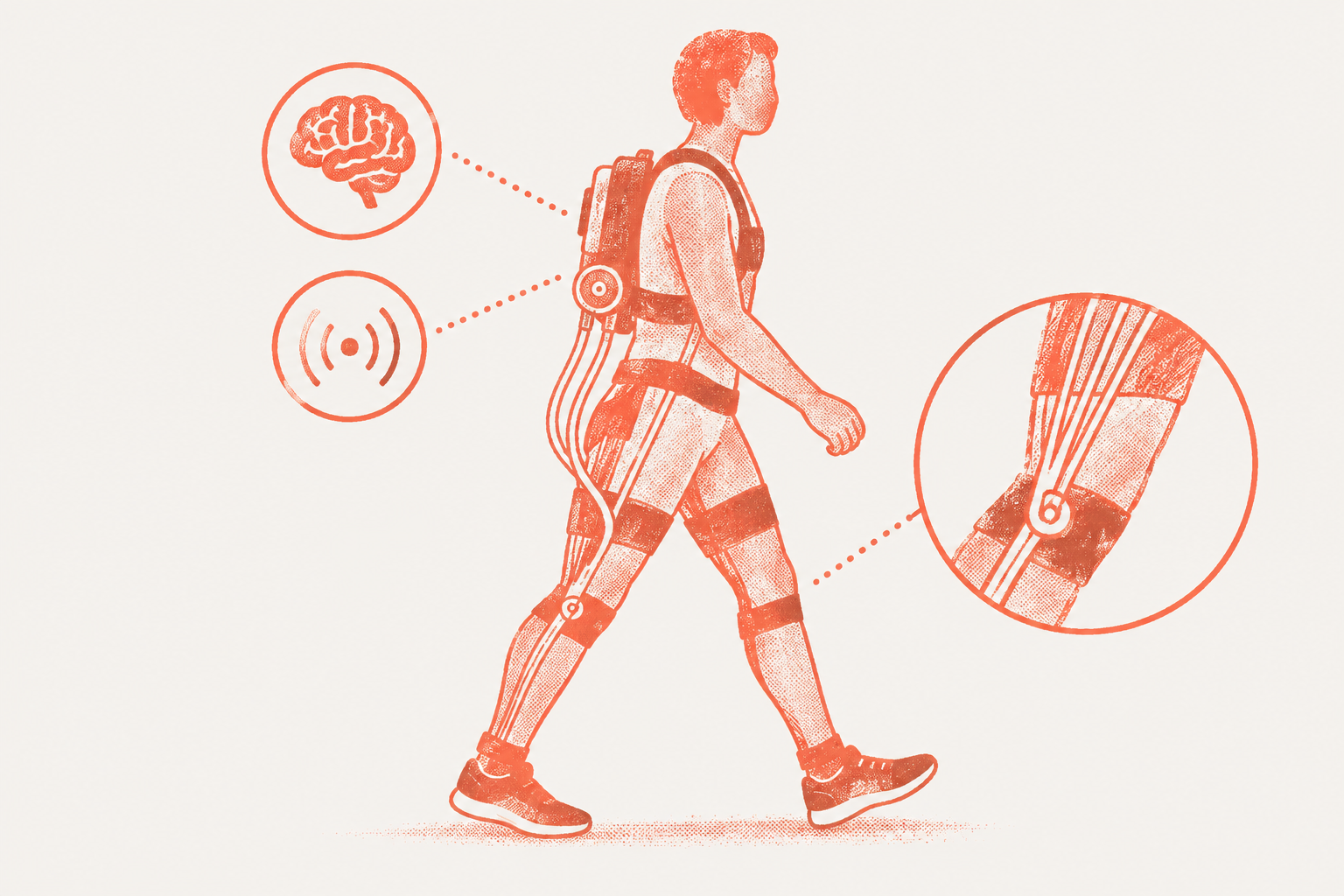 AI illustration
A soft exosuit uses artificial tendons to help its wearer rise from a chair and walk, according to a report by Andreas Schmitz for the Technical University of Munich. The university's researchers designed the system to provide support at the hip.
The assistance comes from a small motor unit carried on the back. It is connected to artificial tendons, with the rest of the suit comprising a belt around the waist and straps on both thighs. The system can be put on or removed within a few minutes, the report says.
Two thigh-mounted sensors track leg movement and send their measurements to a controller. When it identifies standing or walking, the controller directs the motor to pull the tendons. This times the assistance to the movement rather than delivering support independently of what the wearer is doing.
Machine learning helps determine when that assistance is needed, according to researcher Dr. Xiaohui Zhang. The team first gathered movement measurements from young, healthy people to train its recognition algorithm. Additional usage data can help the researchers refine the system. Timing is central to the design: standing up involves a coordinated sequence of hip and leg movements, and the suit has to work in step with that sequence.